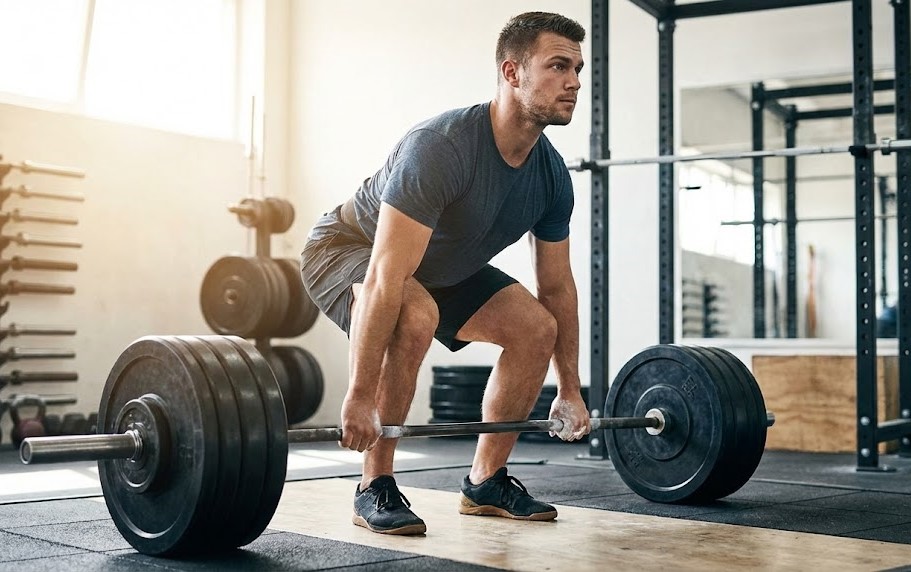
Introduction: Deadlifts are a powerful compound lift that works your entire posterior chain, hamstrings, glutes, back, and traps. Done incorrectly, however, they can be risky for your lower back. At LiftingBuddie, we incorporate high-intensity, safe lifting principles from Yates, Mentzer, and Platz to teach you exactly how to deadlift safely while building massive strength.
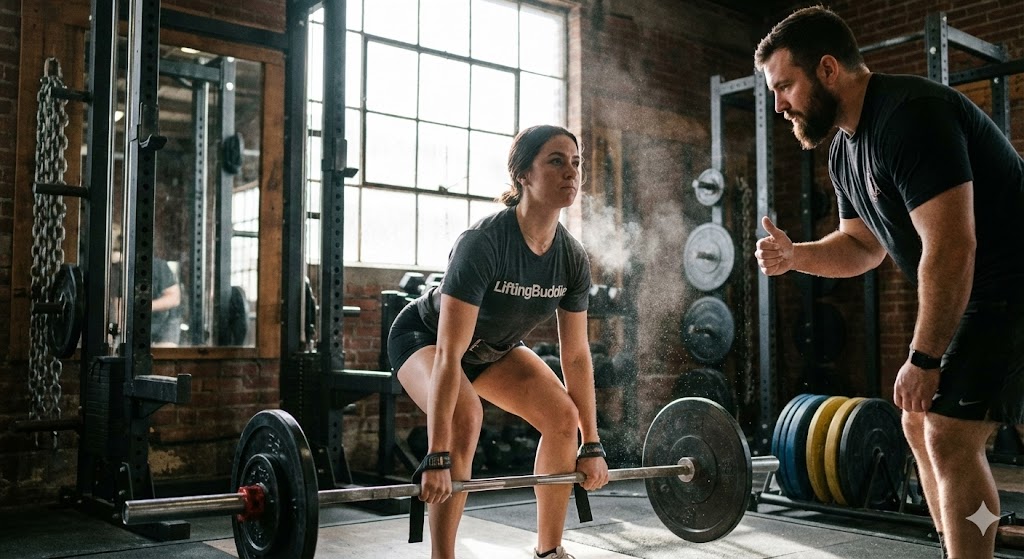
1. How to Deadlift Safely: The Setup
Before you even touch the bar, your stance dictates your safety.
- Stand with feet hip-width apart, bar over mid-foot. If the bar is too far away, you put unnecessary strain on your lower back.
- Grip the bar just outside your knees. A double-overhand grip is best for beginners to build forearm strength.
- Keep your chest up and shoulders back. Imagine trying to put your shoulder blades in your back pockets.
2. Engage Your Core and Hips
Most injuries happen because the lifter gets loose before the pull.
- Brace your core like preparing for a punch. This internal pressure protects your spine.
- Push hips back as you lower to grip the bar. Think of this as a hinge movement, not a squat.
- Maintain a flat spine throughout the lift. Never let your back round like a fishing pole.
3. Controlled Lift Execution
Now that you are tight, it’s time to pull.
- Drive through your heels, not your toes. Imagine pushing the floor away from you.
- Keep the bar close to your body. The bar should essentially drag up your shins and thighs.
- Stand tall at the top without hyperextending your lower back. Just lock your hips; don’t lean back excessively.
4. Breathing Technique
- Inhale and brace before lifting. Take a big belly breath to stabilize your core.
- Exhale once fully standing. Don’t let your air out while the weight is moving up.
5. Common Mistakes to Avoid
- Rounding the lower back. This is the number one cause of injury.
- Lifting with the arms instead of legs/hips. Your arms are just ropes holding the weight; your legs do the work.
- Jerky movements or bouncing the bar off the floor. Control the weight; don’t let momentum do the work.
- Overloading weight before mastering form. Leave your ego at the door.
6. Safety Tips
- Start with light weights or a trap bar to learn form. The trap bar puts less shear force on the spine.
- Gradually increase load as you build strength. Progressive overload is key, but safety comes first.
- Rest properly between sessions. Recovery is when muscle growth happens. If you are feeling fatigued, read more about preventing back pain on WebMD.
7. Advanced Tips & Next Steps
- Slow negatives for greater muscle engagement. Lowering the weight slowly builds massive tension.
- High-intensity sets can be used once your form is solid.
- Keep a lifting log to track progression safely.
Frequently Asked Questions (FAQ)
Is deadlifting bad for your lower back? No, quite the opposite! When you learn how to deadlift safely with correct form, it actually strengthens your lower back and protects it from future injuries. Injuries usually happen only when people lift with a rounded spine or use too much weight too soon.
Should I do Sumo or Conventional deadlifts? For most beginners learning how to deadlift safely, we recommend starting with the Conventional deadlift (hands outside knees) because it builds the most overall back strength. However, if you have long legs or flexibility issues, Sumo (wide stance, hands inside knees) might feel more comfortable.
Do I need a weightlifting belt? Not immediately. You should first learn how to brace your core naturally. Once you are lifting heavy weights (near your body weight or more), a belt can help increase intra-abdominal pressure to keep your spine safe.
Why do my shins bleed? This happens when you keep the bar close (which is good technique!), but dragging the knurling against your skin can hurt. To fix this, wear long socks or pants on deadlift days to protect your shins.
Building a Complete Physique
Once you have mastered the deadlift, you need to balance your physique. To build complete leg development, you should complement your deadlifts by learning how to squat safely. Finally, don’t forget your upper body; balance your strength by learning how to bench press safely.
Conclusion
Deadlifts are highly effective, provided you know how to deadlift safely with proper form, controlled movements, and attention to core engagement. Following high-intensity lifting principles ensures you maximize results while minimizing injury risk.